Canvas Guides3 min read
Framed or Frameless Canvas? Finding Your Kind of Finish
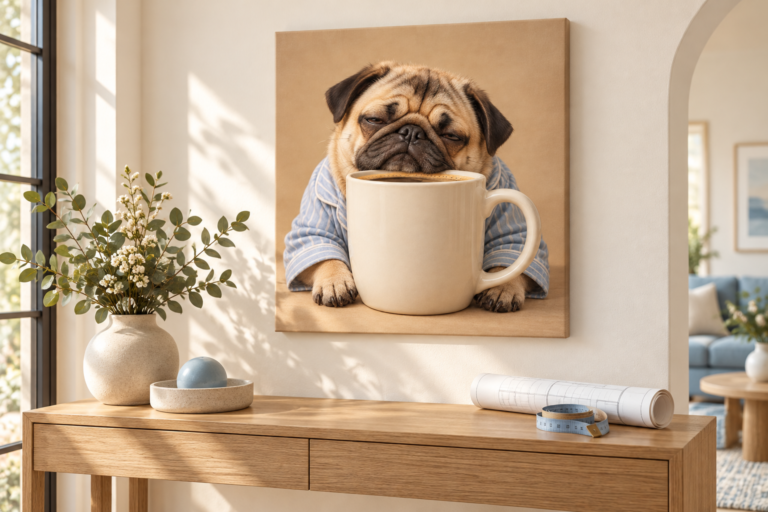
A decorative frame changes the mood of a picture. Here is how to choose the finish that feels right for your room.
Read story
The shape of a canvas affects both the composition and the wall around it. Here is what to look for when switching sizes.
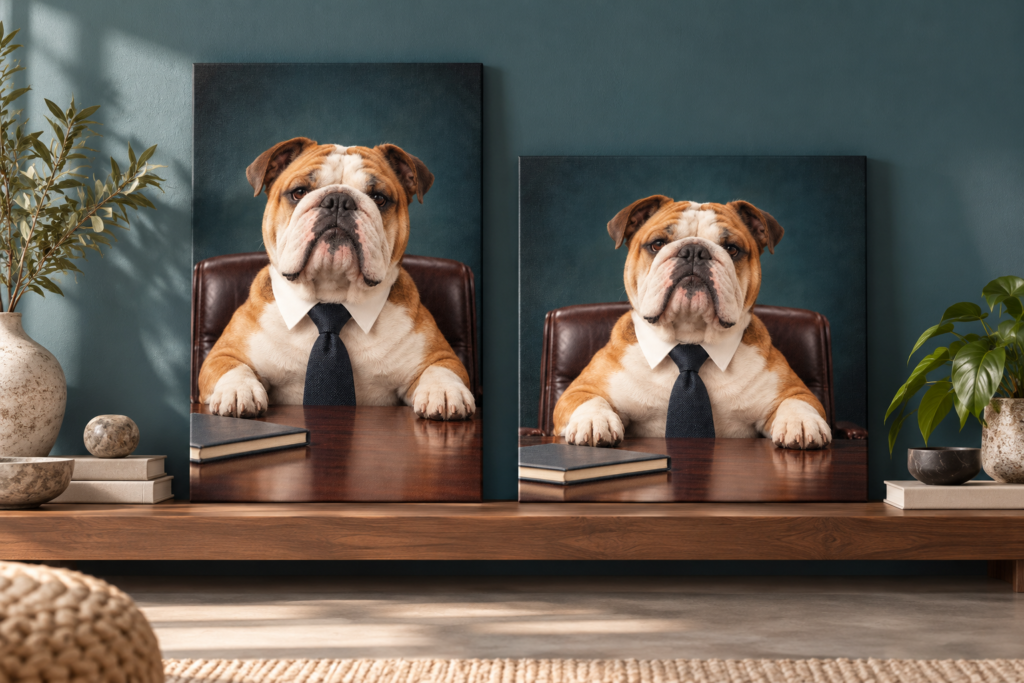
Two canvases can show the same animal and feel quite different. A tall portrait draws your eye up towards a face. A square composition feels more centred and contained. When choosing a size, the relationship between width and height deserves as much attention as the measurements themselves.
A 40 × 50 cm canvas has a different proportion from a 50 × 50 cm square. A 50 × 70 cm canvas is taller and narrower in character than the 40 × 50 cm format. These differences affect how much space appears around the animal, where the props sit and how the picture relates to nearby furniture.
Begin by noticing the shape of your available wall. A narrow space beside a bookcase may suit a portrait. A compact area above a bedside table might welcome a square. Neither is a rule: it is a useful starting point for testing an outline.
A vertical canvas can give a seated animal a strong presence. It leaves room for a face, a body and a telling object below—a coffee cup, a notebook or a plate. The eye travels through the scene rather than across a broad horizon.
On a narrow wall, leave some space at the sides so the canvas does not feel wedged between furniture. If you are placing two portraits together, compare their top edges and the gap between them before hanging either one.
A square often feels steady and self-contained. It can work well in a small grouping or over furniture with a strong horizontal line. The centred character becomes the anchor, with props arranged around it.
The Boss offers a useful example of an expressive subject whose desk and serious face both matter. Look at the preview for each available size rather than assuming every option simply enlarges the first image.
FansGram uses separate compositions for different aspect ratios in this collection. The character and idea stay recognisable, while the surrounding space and details may change. Sizes that share a ratio can share the same composition.
This is why selecting a square after a portrait can change more than the outline of the product image. Check the chosen preview carefully: decide which arrangement you enjoy, then confirm that its dimensions suit your wall.
First choose the shape that works in the room. Then choose the size within the available options. Our measuring guide can help with the second step. If a specific shape is essential, use the shop’s size filter to find the artworks that offer it.
A decorative frame changes the mood of a picture. Here is how to choose the finish that feels right for your room.
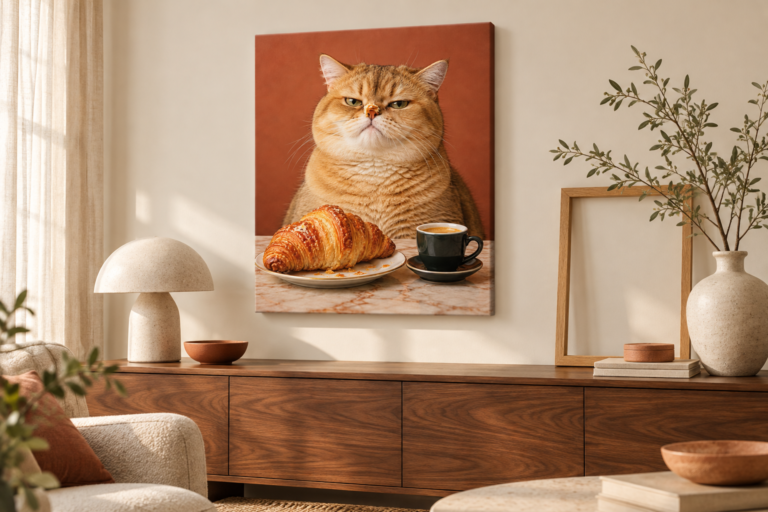
Read storyMeasure the space, test the outline and choose a scale that gives the animal—and the joke—room to breathe.
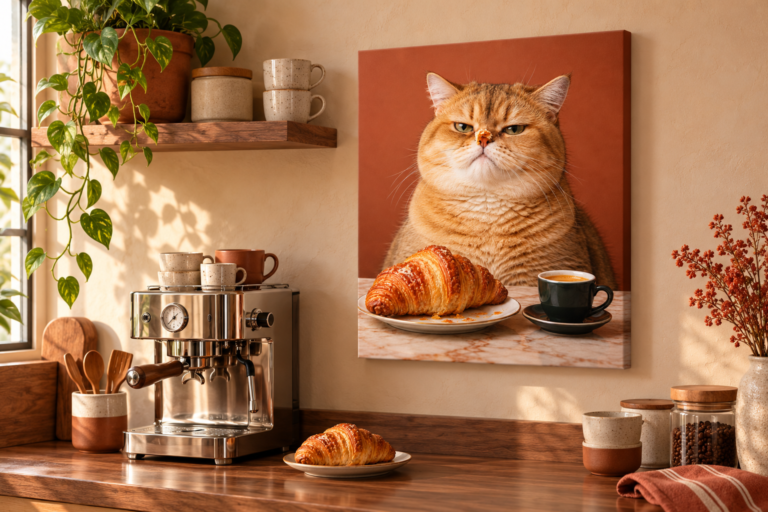
Read storyBuild a welcoming coffee corner with one expressive animal, a warm palette and a little breathing room.
Read story