Canvas Guides3 min read
Framed or Frameless Canvas? Finding Your Kind of Finish
A decorative frame changes the mood of a picture. Here is how to choose the finish that feels right for your room.
Read story
Mix characters and canvas sizes while keeping the whole arrangement calm, connected and easy to read.
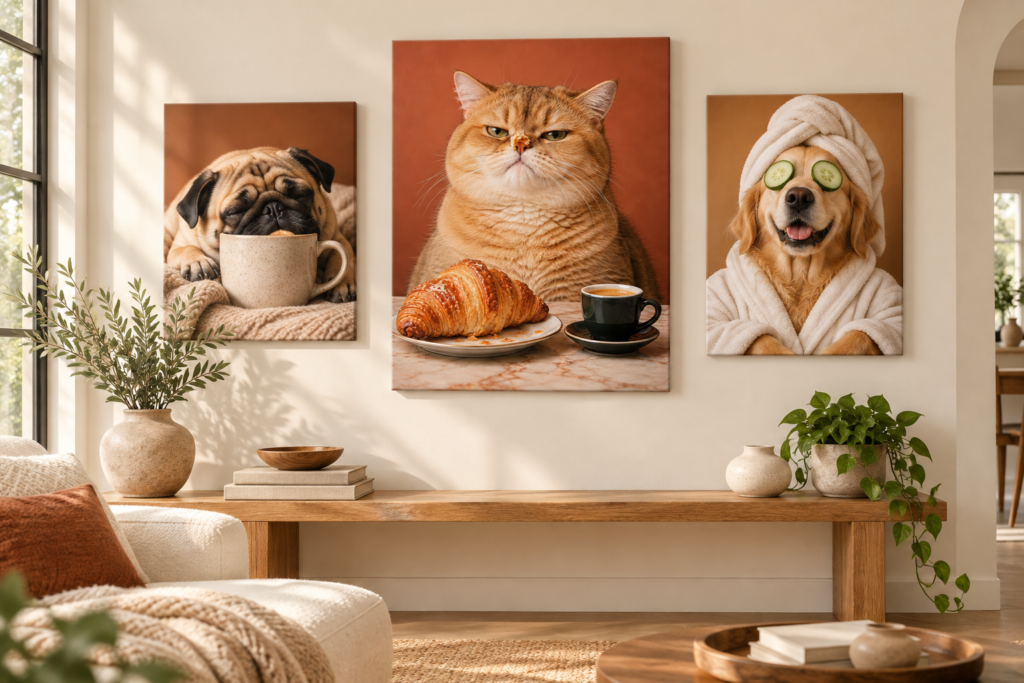
One animal portrait is a character. Three can become a conversation. A gallery wall lets you combine moods, colours and sizes, but the arrangement works best when something holds the group together.
You do not need identical pictures or a perfectly symmetrical wall. You need a clear starting point and a little planning before the first fixing goes in.
Begin with the canvas you most want to see. It might be the largest piece, the boldest background colour or simply your favourite expression. Build around it rather than buying several unrelated pictures and hoping they settle into place.
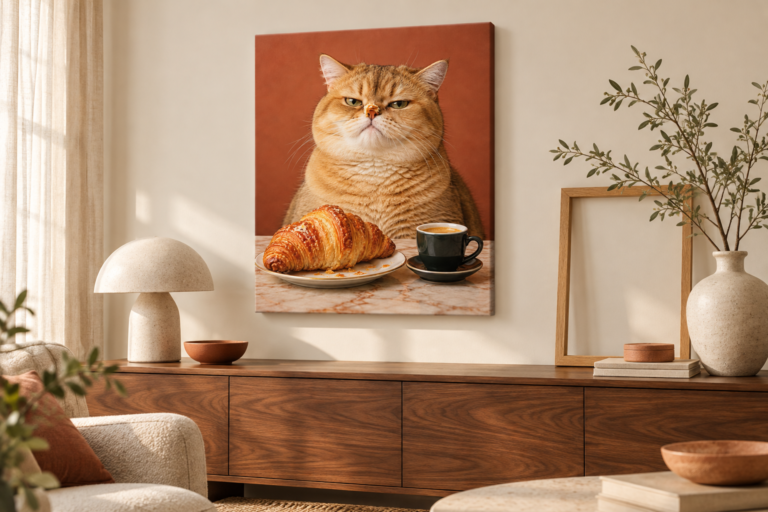
A warm portrait such as The Croissant Critic can lead a breakfast-themed group. For a calmer arrangement, use spa characters and soft colours. A shared mood can be as useful as a shared subject.
Look for a colour that appears in more than one artwork, similar background tones or a common everyday ritual. You can mix cats and dogs without losing coherence if the surrounding colours work together.
Avoid trying to match everything at once. If all the pictures share a strong palette, their sizes can vary. If their colours differ, a more orderly arrangement can help the group feel intentional.
Lay out paper templates in the sizes you are considering. Start with the anchor, add a second piece and then decide whether a third improves the arrangement. Photograph the layout from above so you can compare alternatives.
Try keeping the gaps similar, even if the outer edges form an irregular shape. Then move the paper outlines to the wall using a method safe for its finish. Step back to check the whole group in relation to the furniture below.
A portrait beside a square can be lively, but make sure the smaller piece does not feel like an afterthought. Align a top edge, a centre line or the bottom of two pieces to create a quiet point of order.
Different artworks offer different size selections. Check each product’s available options and preview the chosen composition. Our guide to canvas proportions explains why the shape can change the way a scene reads.
A gallery wall does not have to cover the whole surface. Leave space around the group and keep nearby shelving from competing with it. If you are unsure about one extra picture, try living with the smaller arrangement first.
The goal is a collection that feels chosen, not crowded. Each animal should have enough room for its expression—and its little joke—to be noticed.
A decorative frame changes the mood of a picture. Here is how to choose the finish that feels right for your room.
Read storyMeasure the space, test the outline and choose a scale that gives the animal—and the joke—room to breathe.
Read storyThe shape of a canvas affects both the composition and the wall around it. Here is what to look for when switching sizes.
Read story