Canvas Guides3 min read
Framed or Frameless Canvas? Finding Your Kind of Finish
A decorative frame changes the mood of a picture. Here is how to choose the finish that feels right for your room.
Read story
A few gentle habits help you look after a canvas. Start with a dry location and the product’s own care instructions.
A canvas does not need an elaborate cleaning routine. In most homes, the more useful decisions happen before it reaches the wall: choosing a suitable location, handling it carefully and keeping avoidable moisture and knocks away.
Always follow the care instructions supplied with your particular print. The suggestions here are general precautions, not a substitute for product-specific advice about its inks, coatings or construction.
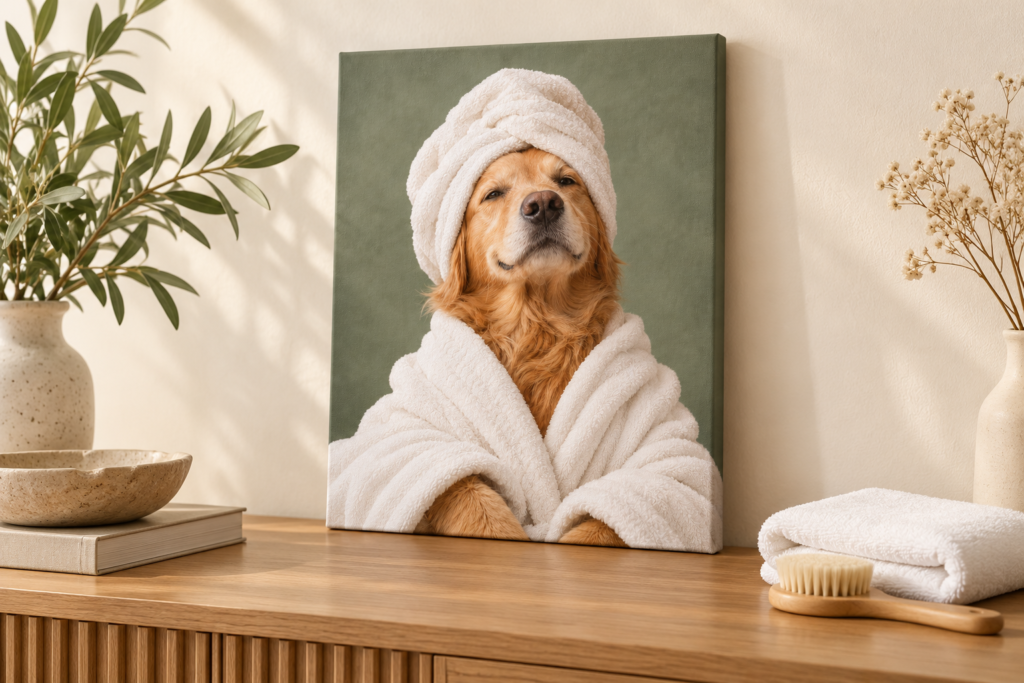
Keep the canvas away from direct splashes, cooking grease, persistent condensation and strong heat sources. Avoid prolonged direct sunlight. A kitchen or spa-themed image can look lovely near those rooms, but its subject does not make the physical canvas washable, heatproof or waterproof.
If a wall regularly feels damp or collects condensation, find another position. In a busy room, also consider moving doors, chair backs and shelves that could bump the surface.
Check the supplied instructions before cleaning. For routine loose dust, use only a gentle dry method if the supplier permits it. Do not press hard on the fabric, scrub a mark or spray household cleaner onto the picture.
Avoid wet cloths, solvents and improvised stain treatments unless specifically approved for that print. If something spills onto the canvas or a mark does not lift easily, stop and ask the supplier for advice. A small mark is preferable to a larger damaged patch caused by repeated rubbing.
Use clean, dry hands when moving the canvas. Support it securely and avoid pushing fingers into the printed face or pressing against the fabric from behind. Clear the route before carrying a large piece through a doorway.
Do not leave a canvas balanced where a child, pet or passing bag could knock it over. Temporary styling on a shelf still needs a stable, suitable support; a photograph of a leaning canvas is not a hanging instruction.
Choose hanging hardware for the wall type and the actual weight of the artwork, following the hardware manufacturer’s instructions. Check that the canvas sits securely before letting go. If you are unsure about the wall or fixing, get appropriate practical advice.
Look at the position again after moving nearby furniture. A new lamp, radiator or appliance may change the heat or moisture conditions around a previously suitable spot.
Keep the original protective packaging where possible. Protect corners, prevent other objects from pressing into the face and keep adhesive tape away from the printed surface. Store the packed canvas in a dry, stable indoor place rather than a damp garage or a hot car.
Simple care is mostly about avoiding unnecessary treatment. Choose a good home for the picture, handle it thoughtfully and let the animal get on with being the centre of attention.
A decorative frame changes the mood of a picture. Here is how to choose the finish that feels right for your room.
Read storyMeasure the space, test the outline and choose a scale that gives the animal—and the joke—room to breathe.
Read storyThe shape of a canvas affects both the composition and the wall around it. Here is what to look for when switching sizes.
Read story